Like any place Sligo is as much about its people as it is about physical characteristics or what happens there, and its people pop up in lots of places other than Sligo.
From time to time on this blog I will chat with some of those people, and in particular (but not exclusively) Sligo people who, like me, are outside Sligo but looking in. We won’t just be reflecting on Sligo but also on some key elements of their careers and lives to date.
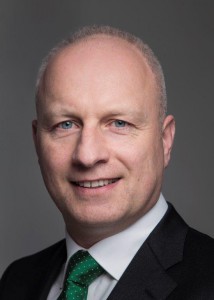
First up, I’ve stayed close to home and put a few questions to my brother, Seán McKeon. Seán is an accountant by training. An All-Ireland Colleges gaelic football finalist with Summerhill College in 1985, he began his career with Gilroy Gannon in Sligo and studied in IT Sligo and the UCD Michael Smurfit School. He has spent most of his career in the leisure, hospitality and retail sectors and has worked in national and international roles, including two spells in Spain and a period in Russia. Sean has been Chief Finance Officer of the Dalata Hotels Group plc since shortly after it was founded in 2007.
Dalata is Ireland’s largest hotel operator and joined the Stock Exchange as a public company two years ago. I asked him about that experience, about his path to that role, the influences on his career and how he now looks back on Sligo and the North West.
- Dalata is big business now. Has the shift to being a public quoted company been in line with what you expected, and has anything surprised you?
Yes, it has been generally as expected, the greater change in Dalata in the past couple of years has been the change in our business model from hotel manager to hotel owner. Turnover has grown from about €60 million to well over €200 million in less than a year and the Balance Sheet has grown in multiples because of our fundraising and investment activity.
- To what extent has your previous experience and training prepared you for the public role?
For most of my career I worked in private companies however, Dalata since its foundation in 2007 was managed and governed along the lines expected in a public company. The years leading up to the listing in 2014 were the most important, we had good structures and good advisors so the transition was smooth.
- You mentioned how the Dalata model has changed in the past two years – is that very different for your role?
Yes. The number of hotels operated by Dalata now is similar to the number before the IPO but because the company now owns most of the hotels and all of the associated risks, etc., the volume of work for the central finance team has increased. With the increased size there is greater complexity: in financial consolidation, taxation and treasury management, risk management, and investor and banking relationship management.
- What has been the biggest challenge in getting the business this far?
Surviving the collapse in hotel revenues between late 2008 and 2011, there were times during those years when the future was very uncertain.
- What, or who, has been the biggest influence on the business and on your career to date?
On the business – though he would be the first to acknowledge that there have been many others (and circumstances) that have contributed to Dalata’s success Sligoman Pat McCann, who founded Dalata in 2007, has been its driving force.
On me – many!
- To what extent has technology been a factor in the development of the business – the sector and your own business specifically?
Technology has changed the way hotels interact with customers. A great proportion of hotel bookings are made online and customer feedback is broadcast across a range of social media platforms. Interestingly, changes in technology have had relatively little impact on the customer experience in the hotel itself and service delivery; it’s still a people business!
- Last year saw Dalata take further steps into the UK market and it has stressed its intention to continue in that regard. Do you see it developing into other territories?
Dalata is an ambitious company but there is a great deal to do to develop the business, firstly in Ireland and then build on the start made in the UK before we look further.
- The hotel sector and tourism are interdependent. How do you feel the Irish tourism sector has responded to the swings in growth over the past decade
The tourism sector has been very resilient and is now recovering strongly. The Irish tourism industry is a terrific asset, it is one of our biggest employers and offers great career opportunities. The great thing about a career in tourism is that it is not difficult to get started and with a little hard work the possibilities can be very interesting.
- How do you rate the north west as a place to do business –and if not, what does it need to do?
The north west is as good a place to do business as any. I came across the Sligo Champion’s 150 year anniversary special (published in 1986) recently and I was struck by the account of the development of Sligo IT from its beginnings in the early 70’s up to that point, when I was a student there. There were early objections to the project – the money would be better spent on second-level education in the town. The IT is unrecognisable now from my time as a student there and I think it should be treasured as a hub for local innovation and development, social, cultural and commercial.
- What are the next steps for Dalata?
Complete our acquisition programme in 2016, integrate all of the hotels under our Maldron and Clayton brands and build in Dublin.
Thanks Seán.
 From the outside looking in...